Relics: The Spear of Destiny
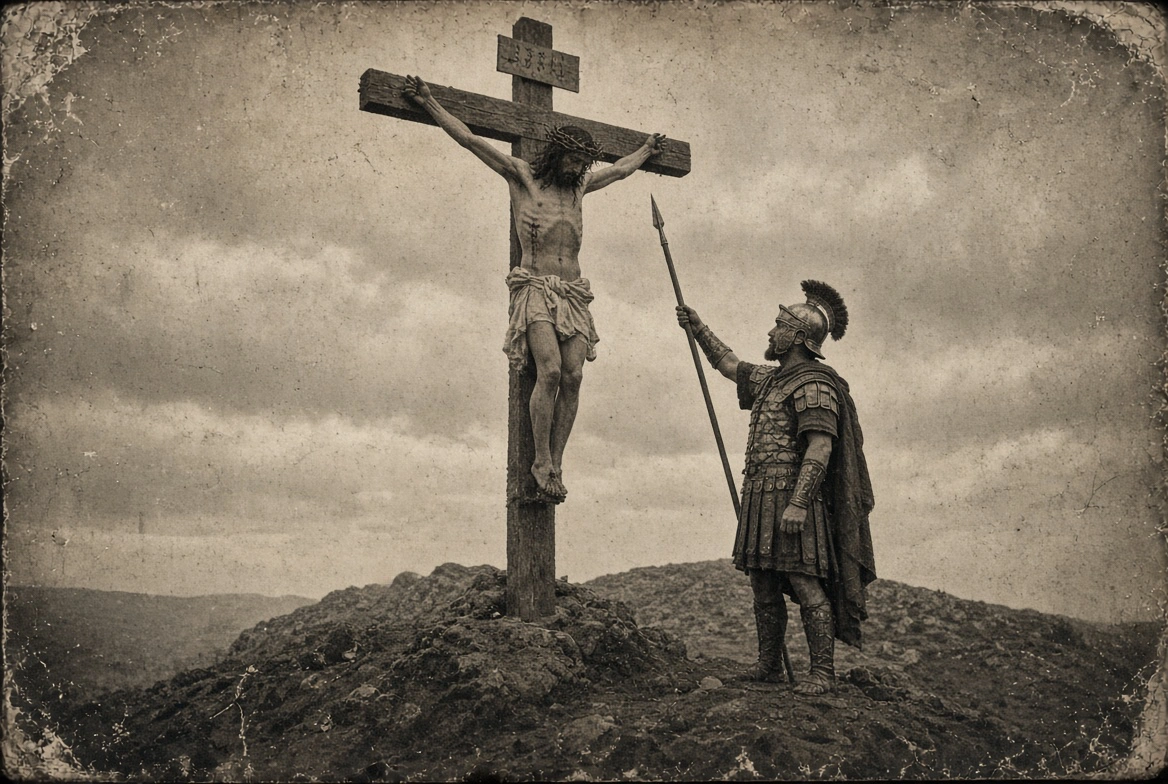
Welcome to our new series on ancient relics, kicking off with the Spear of Destiny—tracing Longinus, rival lances, Nazi lore, and centuries of competing claims.
Relics: The Spear of Destiny
Welcome to our new series on ancient relics. Throughout the year, we will cover multiple relics and track each one over time using a node system. These articles will be living documents updated whenever new information emerges. Every relic will get its own article and node map to trace its history across the years. Our research is not limited to religious artifacts; we will cover anything we find interesting. First, let's define what a relic is.
Merriam-Webster defines the noun relic as either a sacred object linked to a saint or martyr, or a surviving trace of something that has faded away.
Relics are not strictly religious. While the term began with sacred items tied to saints, it now covers any surviving piece of the past—from ancient coins and pottery to rusted battle armor.
The Spear of Destiny—often called the Holy Lance or the Spear of Longinus—is a legendary relic believed to be the Roman weapon used to pierce Jesus's side on the cross.
John 19:31–37 (Revised Standard Version Catholic Edition)
Jesus' Side Is Pierced
31 Since it was the day of Preparation, in order to prevent the bodies from remaining on the cross on the sabbath (for that sabbath was a high day), the Jews asked Pilate that their legs might be broken, and that they might be taken away. 32 So the soldiers came and broke the legs of the first, and of the other who had been crucified with him; 33 but when they came to Jesus and saw that he was already dead, they did not break his legs. 34 But one of the soldiers pierced his side with a spear, and at once there came out blood and water. 35 He who saw it has borne witness—his testimony is true, and he knows that he tells the truth—that you also may believe. 36 For these things took place that the scripture might be fulfilled, "Not a bone of him shall be broken." 37 And again another scripture says, "They shall look on him whom they have pierced."
In plain English:
On the day before the Sabbath, Roman soldiers broke the legs of the two men crucified beside Jesus to speed up their deaths. Finding Jesus already dead, a Roman soldier thrust his spear into Jesus's side, releasing blood and water. The Apostle John witnesses this firsthand and notes that it fulfilled two prophecies: that none of Jesus's bones would be broken and that people would look upon the one they pierced.
Tradition claims the spear that pierced Jesus's side gave its holder invincibility in battle and control over the fate of the world.
Longinus: Biblical vs. Traditional Accounts
Let's start the spear's history with Longinus, the Roman soldier linked to piercing Jesus's side.
- The Gospels: The canonical New Testament Gospels do not name the soldier. John describes an unnamed soldier piercing Jesus's side after his death, releasing blood and water. Separate passages in Matthew, Mark, and Luke describe an unnamed Roman centurion at the crucifixion confessing that Jesus was the Son of God.
- Origin of the Name: The Gospel of Nicodemus is the earliest surviving text to call this Roman soldier Longinus.
- Later Christian Legend: Details often linked to Longinus—such as being blind or nearly blind, regaining his sight from the blood and water, leaving the army, or dying as a martyr in Cappadocia—are not central to the Gospel of Nicodemus. Those episodes expanded in later Christian legends and medieval collections like The Golden Legend.
Rival Relics and Traditions
No verified, unbroken chain of custody connects a surviving spear to the crucifixion. Instead, historians trace overlapping traditions and competing relics—primarily the Vienna lance, the Jerusalem–Constantinople–Rome lance, the Antioch lance, and the Armenian lance.
1. The Vienna Relic ("Holy Lance" / "Lance of St. Maurice")
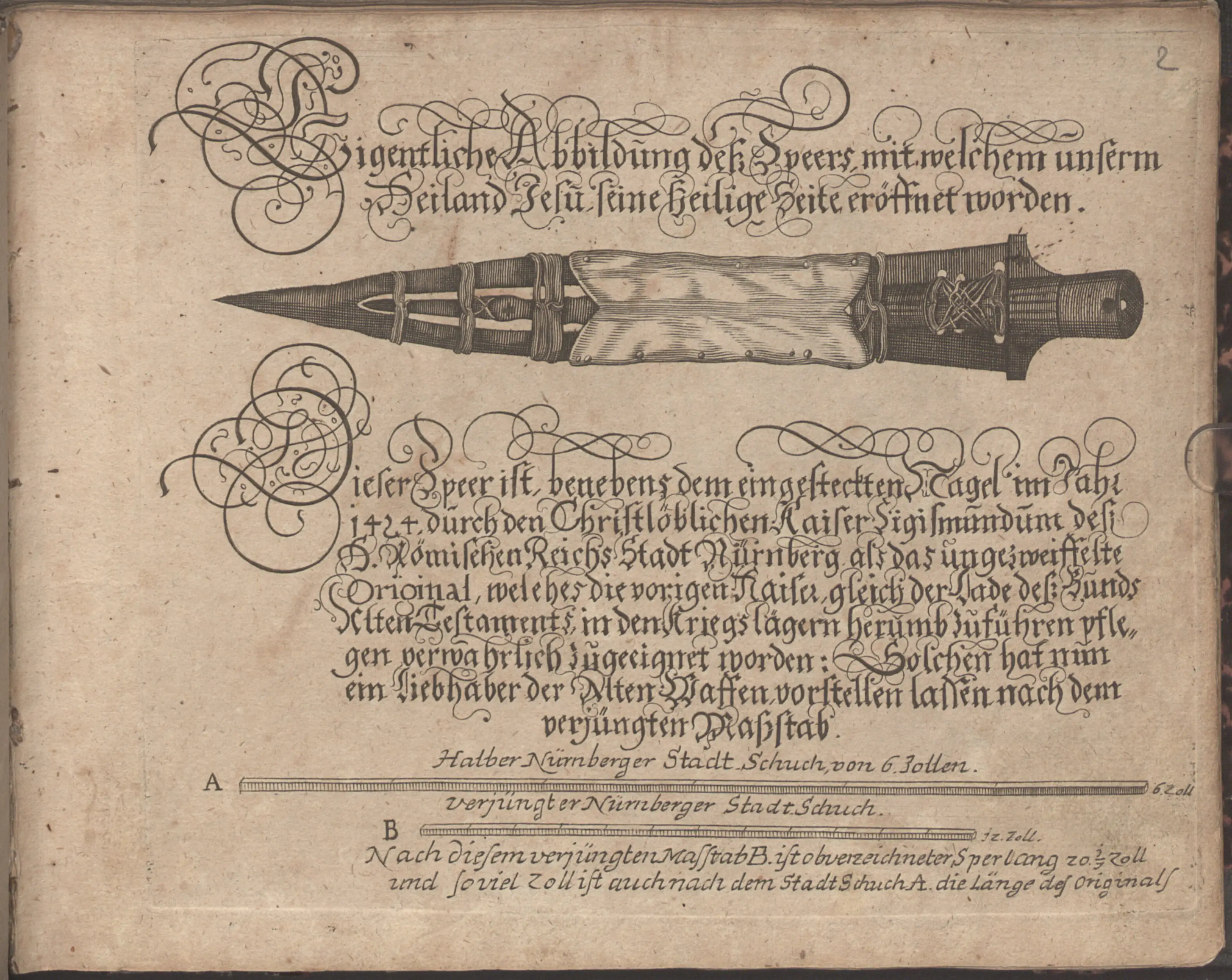
- 10th century (earliest clear records): Linked to rulers of the East Frankish kingdom and early Holy Roman Empire, such as Henry I or Otto I, as a royal or imperial emblem.
- 996 & 1000: Related lances or replicas were gifted to Prince Vajk (later King Stephen I) of Hungary in 996 and Duke Bolesław I of Poland at the Congress of Gniezno in 1000.
- 14th century–1424: Kept among imperial regalia in Prague, then moved to Nuremberg in 1424.
- 1796: Moved to Vienna for safekeeping ahead of Napoleon's forces.
- 1938–1945: Taken to Nuremberg by Nazi Germany after the Anschluss; recovered by U.S. forces in 1945 and returned to Vienna.
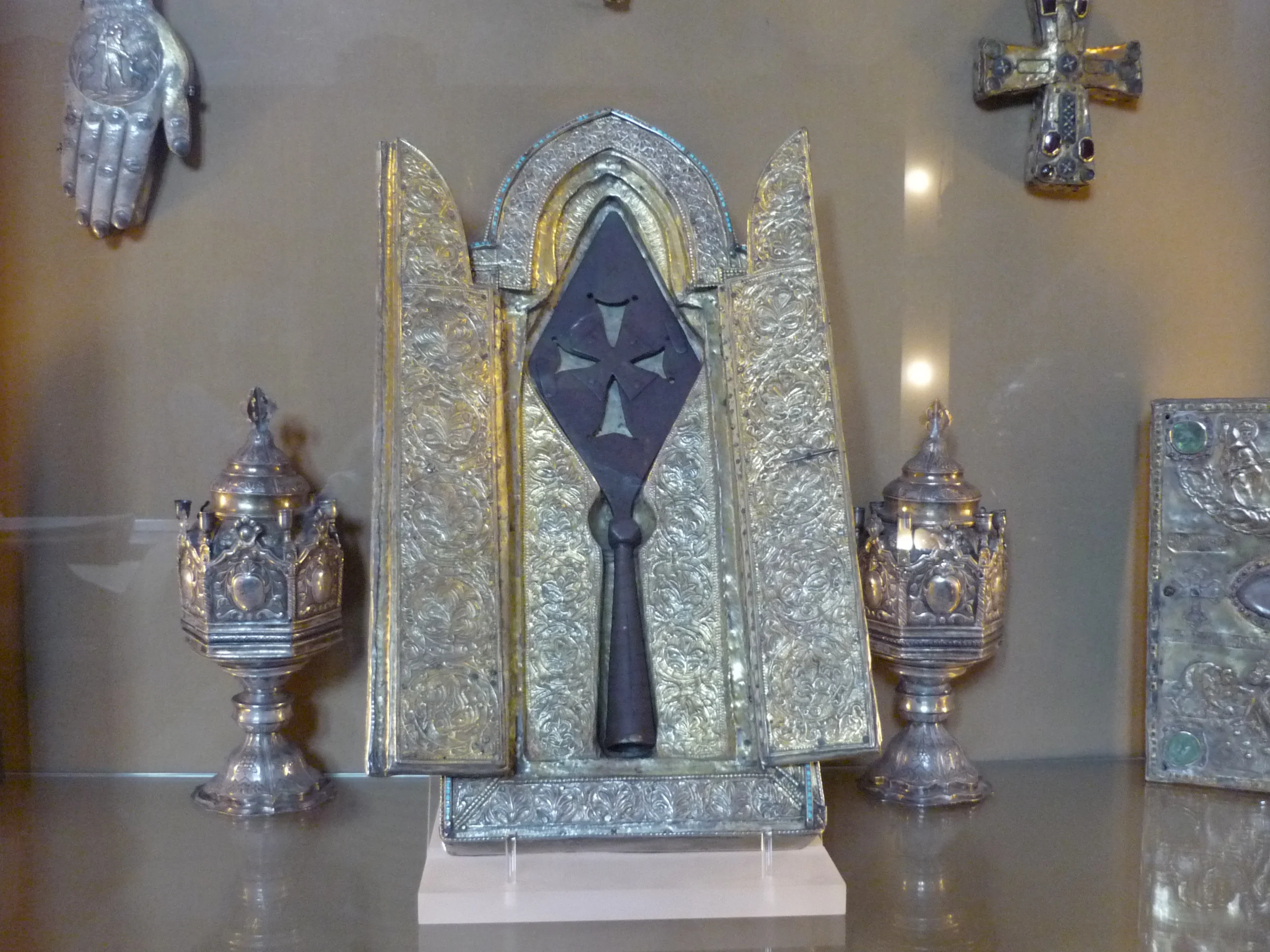
- Present day: Held in the Imperial Treasury (Schatzkammer) at the Hofburg Palace in Vienna.
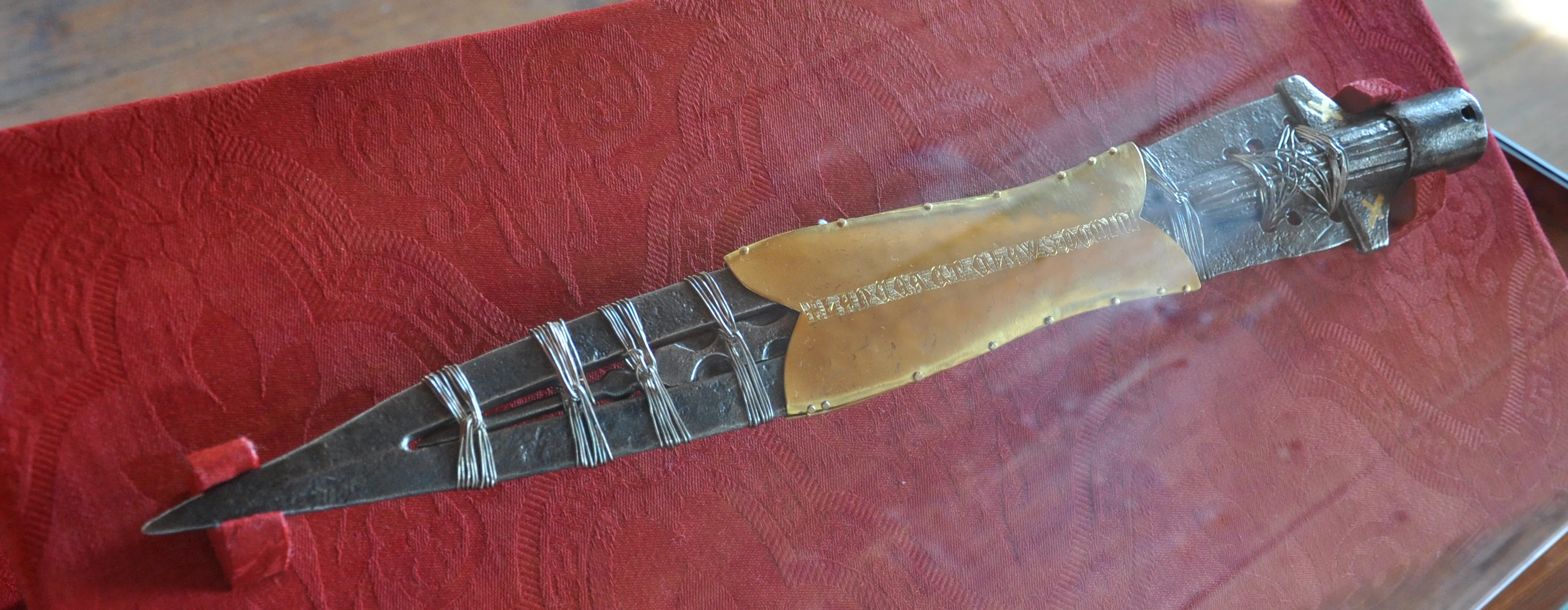
2. The Jerusalem, Constantinople & Rome Relic
Early pilgrim accounts mention a lance in Jerusalem before traditions later centered on Constantinople and Rome.
- c. 530–570s: Pilgrim accounts, including the Breviary of Jerusalem (around 530) and the Piacenza pilgrim (around 570), describe a lance venerated in Jerusalem.
- Byzantine era (Constantinople): A Passion lance was venerated among imperial and church relics in Constantinople.
- 1240s (Paris): King Louis IX of France obtained Passion relics from Constantinople for Sainte-Chapelle in Paris, including a lance point or fragment.
- 1492 (Rome): Ottoman Sultan Bayezid II sent a spearhead relic to Pope Innocent VIII.
- Present day: Kept in a pier beneath the dome of St. Peter's Basilica in Rome, without an official Church declaration of historical authenticity.
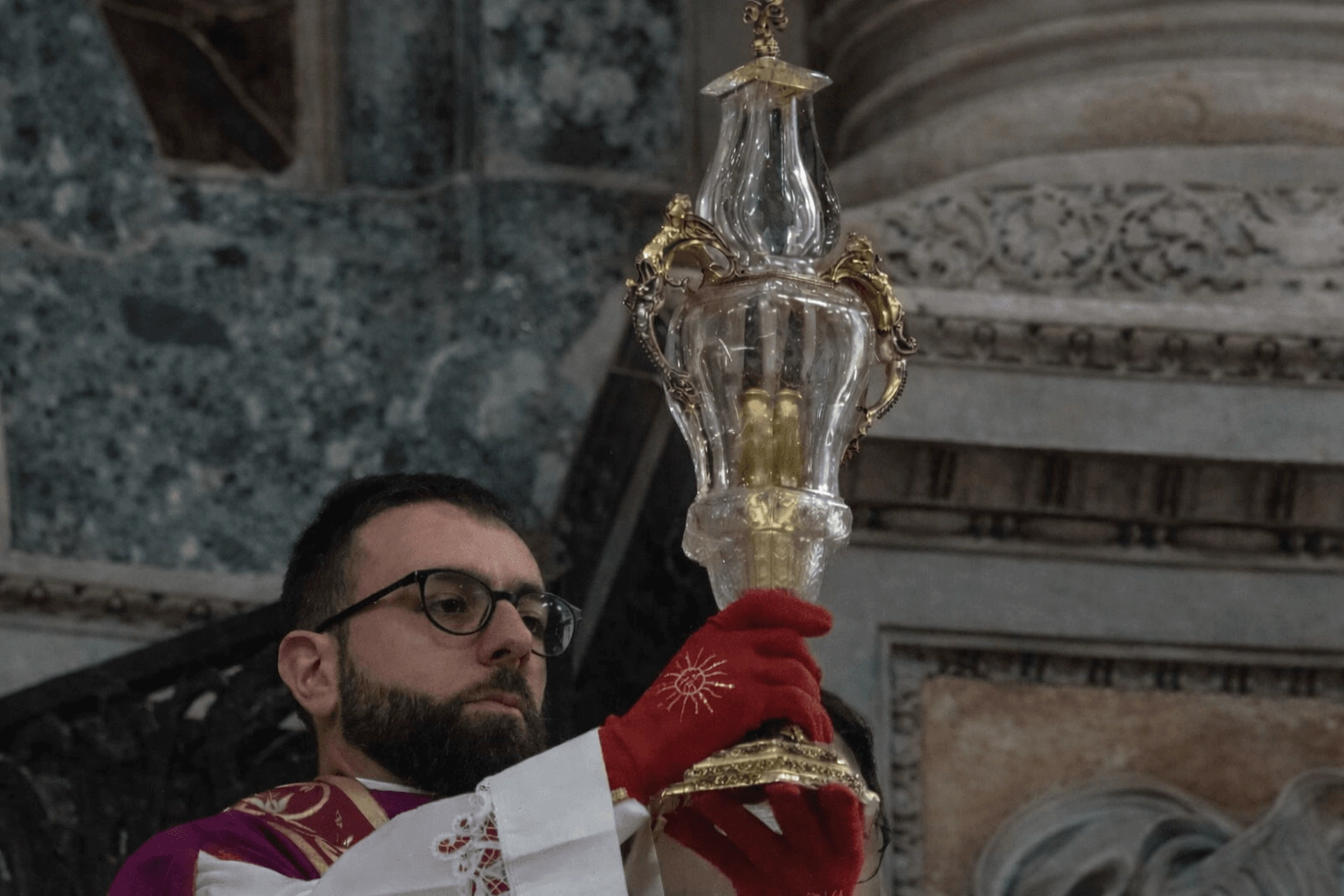
3. The Antioch Relic (First Crusade)
- June 1098: During the siege of Antioch, a crusader named Peter Bartholomew claimed St. Andrew revealed the lance's location beneath the Cathedral of St. Peter; crusaders dug up an iron blade on June 14, 1098.
- 1099: Authenticity was fiercely debated, and Peter Bartholomew died after an ordeal by fire in April 1099, after which the relic lost credibility.
4. The Armenian Relic (Geghard / Vagharshapat)
- 12th–13th centuries: Armenian tradition connects the lance to the apostles Thaddeus and Bartholomew, with earliest written mentions appearing in the 12th century (such as a 1159 hymn) and 13th-century texts.
- Medieval–Modern era: Long tied to Geghard Monastery ("Monastery of the Spear") and later preserved in Vagharshapat (Etchmiadzin), Armenia.
1. Documented History: The Relic, the Anschluss, and 1945
- Pre-War Custody in Vienna: Long before the Third Reich, a metal spearhead—dated by modern specialists to roughly the 7th–9th century—was held in Vienna's Hofburg Imperial Treasury as part of the Holy Roman Empire's regalia.
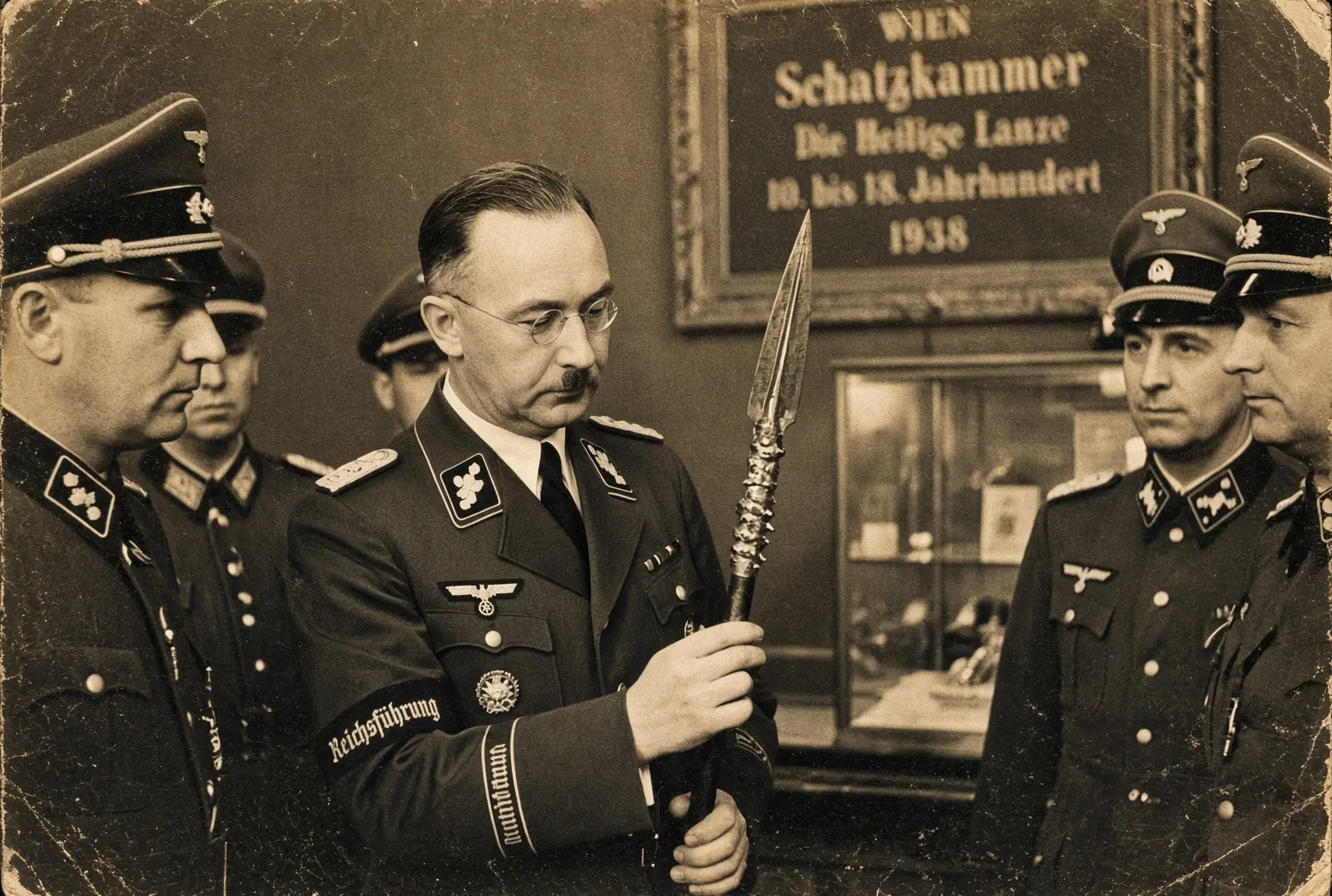
- Annexation of Austria (1938): After the Anschluss (Nazi Germany's annexation of Austria in March 1938), German authorities seized Habsburg imperial treasures in Vienna. In autumn 1938, the regalia—including the lance—were moved to Nuremberg, staged by the regime as a symbolic center of German history and party rallies.
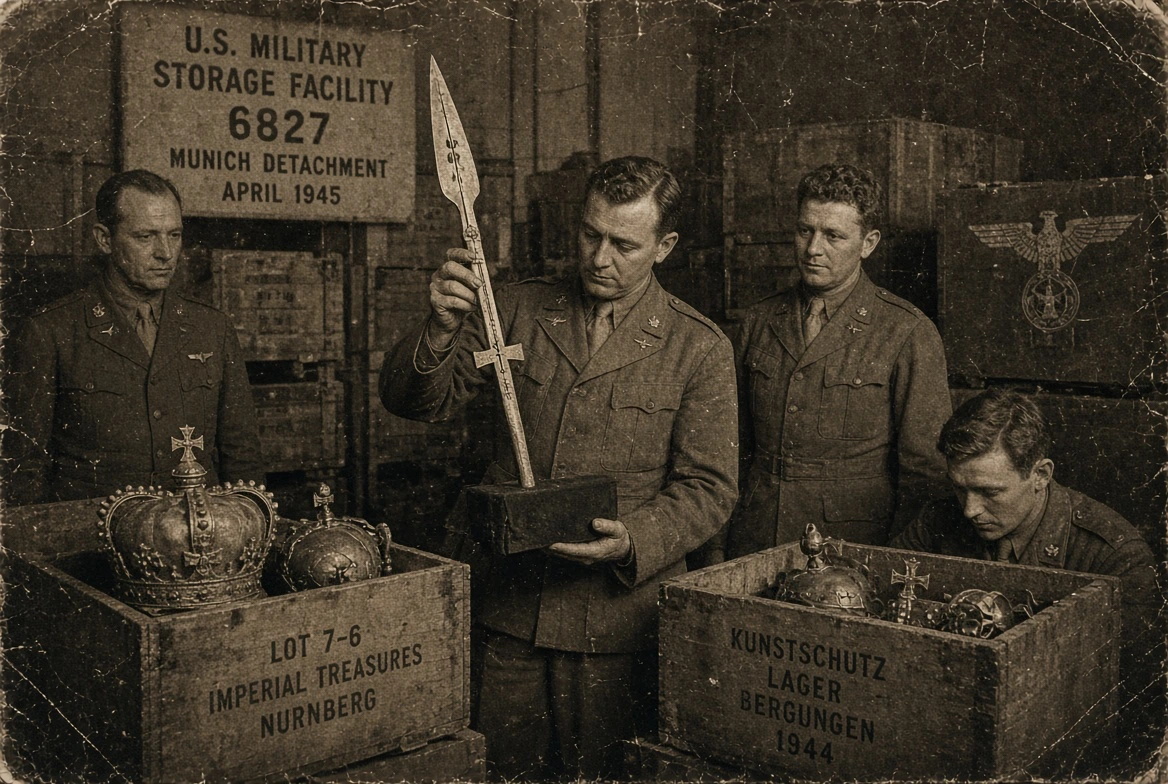
- Wartime Storage and Allied Recovery (1944–1945): As Allied bombing intensified late in the war, the regalia moved into an underground vault or bunker in Nuremberg for protection. In spring 1945, advancing U.S. forces located and secured the vault, and the artifact returned to Vienna's Hofburg collection.
- What Historians Confirm vs. Doubt: Historians confirm the physical movement of the imperial regalia between Vienna and Nuremberg under Nazi rule and its recovery by U.S. troops in 1945. They do not treat the spear as a 1st-century crucifixion weapon or accept claims that Nazi military strategy relied on mystical powers of the blade.
2. Myth & Esoteric Lore
Expanding the Core Account (Ravenscroft & "Destiny")
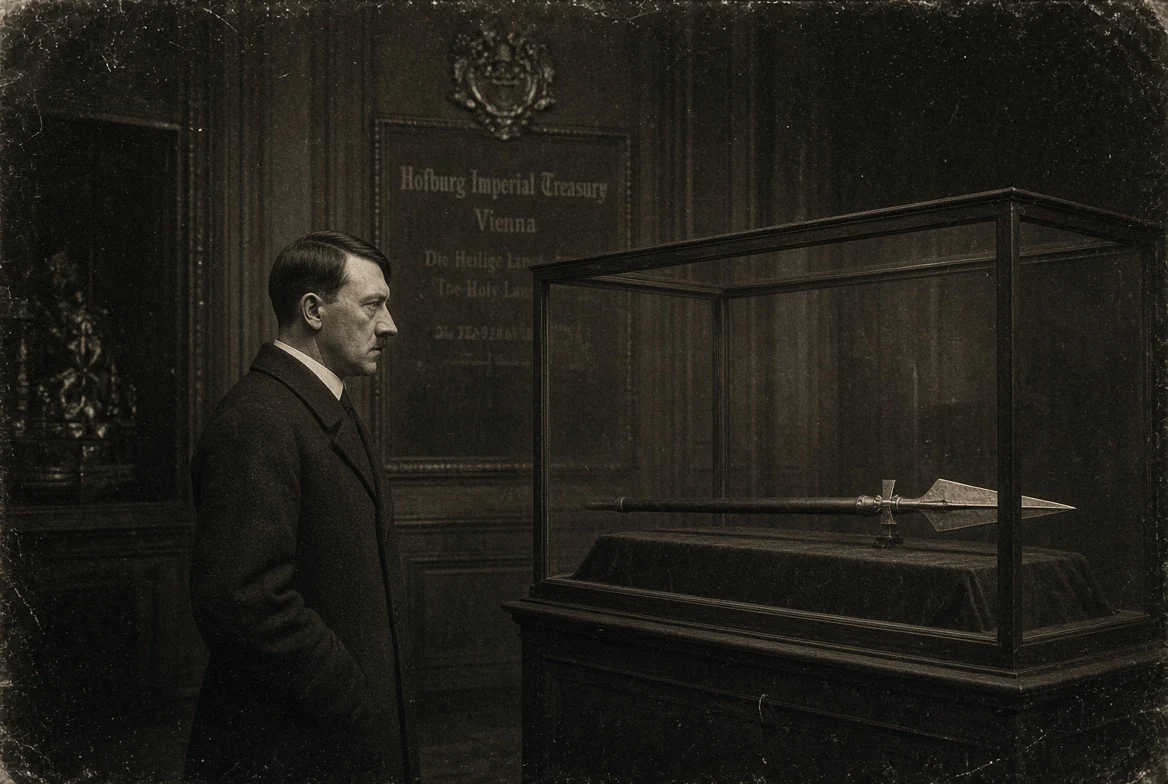
- The Trance in Vienna: In post-war esoteric lore (popularized by Trevor Ravenscroft), a young Adolf Hitler supposedly stood before the Hofburg relic around 1912 and had a mystical awakening—claiming the lance held occult power over human fate and that grasping it meant mastering the world or inviting personal doom.
- The "Blood-Charged" Relic: These accounts treat the spear as a conduit rather than a mere symbol, claiming contact with Jesus's blood gave it spiritual or psychic force that amplified its holder's will.
- The "Curse" of Losing It: A staple of the story is that the spear grants power while held, but losing it triggers collapse. Retellings pair the 1945 Allied capture of the Nuremberg vault with the fall of the Third Reich and Hitler's death as proof of the "curse."
Broader Mashups: Thule, Vril, Tibet, and Antarctica
Once writers combine the spear with broader "Nazi occult" mythology, it enters major 20th-century conspiracy tropes:
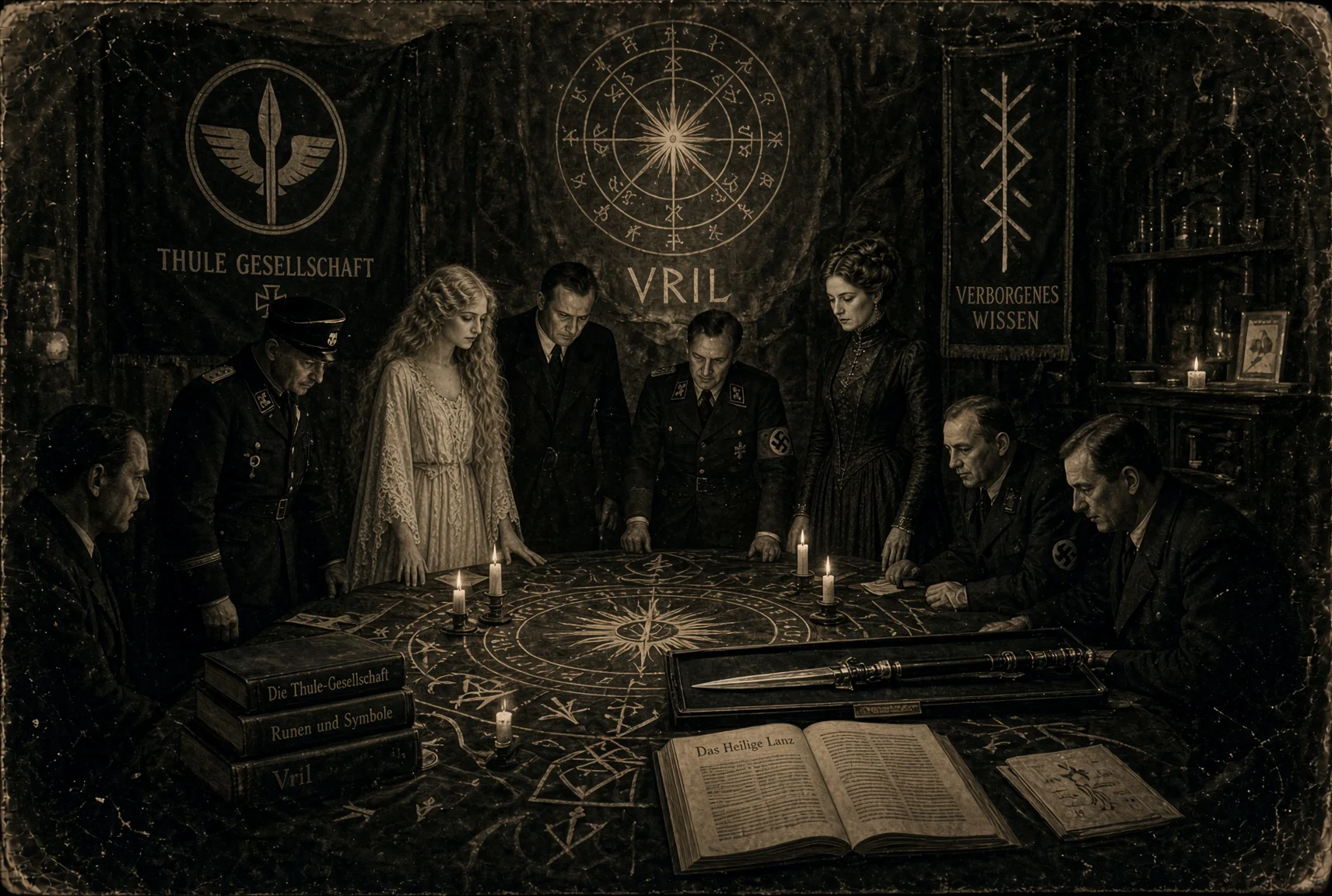
- Thule and Vril Lore: Theories weave the spear into romanticized or invented ideas about the Thule Society, Vril energy, and ancient "Atlantean" or Nordic lineages, portraying SS figures as seekers of lost ancient power rather than bureaucrats and ideologues.
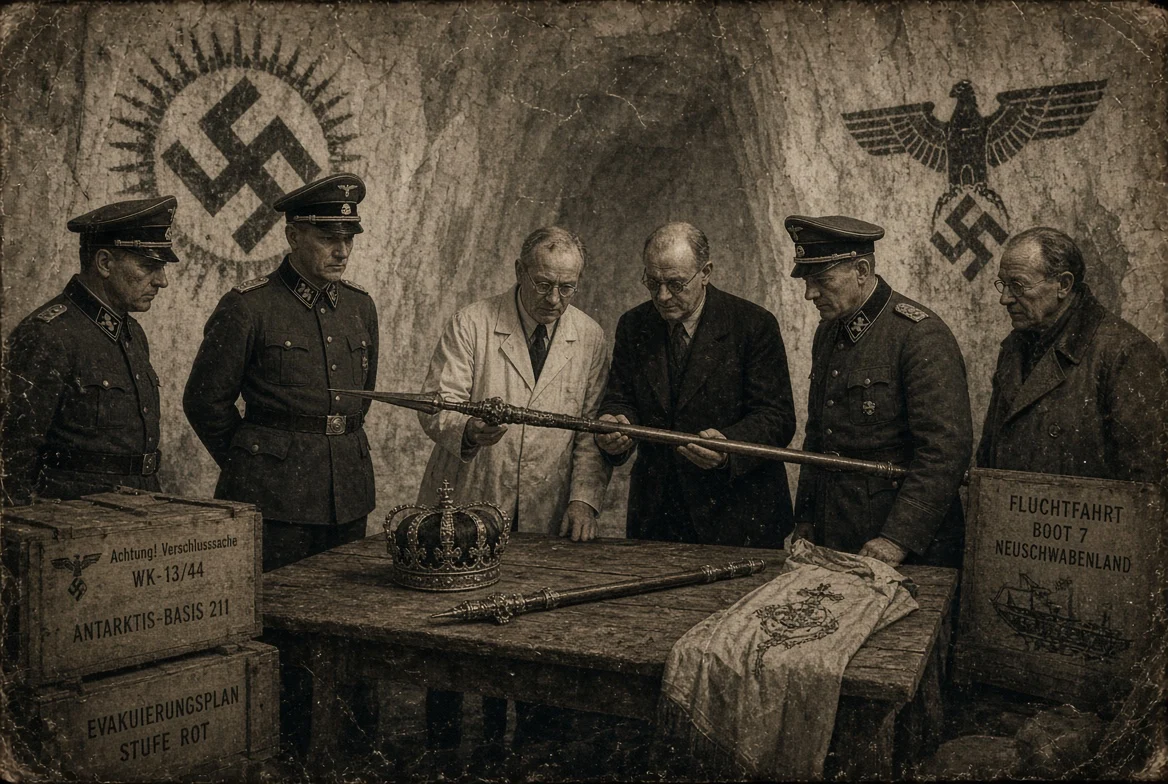
- Hidden Bases & Escape Theories: Stories about seized relics mix with claims about secret Nazi research, Antarctica ("Neuschwabenland"), or U-boat escape plots—arguing either that the "real" spear was moved before Allied troops arrived or that the Nuremberg recovery was a decoy.
Additional Conspiracy Variations
- The "Swapped Relic" Theory: Claims the spearhead returned to Vienna was a replica or secondary blade, while the "true" or more potent relic was quietly routed into U.S. military or intelligence custody.

- Secret Facilities & Black Projects: Tropes from broader conspiracy culture place the object in an undisclosed U.S. vault, military base, or research program—treating a historical relic like a classified artifact from Indiana Jones or The X-Files.
- Supernatural Containment: In heavier esoteric or /x/-style lore, keeping the spear locked away is framed as an effort to contain a "curse," block rivals from its supposed power, or study unexplained properties.
In the end, does anyone really know if the spear truly exists? Personally, I believe it does. After being reclaimed from the Nazis during WWII, it was never returned to the museum in Vienna. Instead, it was taken to the States and hidden away in deep black projects, never to be seen by civilian eyes again. What's on display in Vienna today is just a swap—a rudimentary replica. Scientists from Project Paperclip probably know the real story, though the rest of us likely never will.